Number Eight: A Designer's Review for Small Business Merch
As an experienced embroidery designer who has spent years refining designs for everything from boutique clothing lines to custom staff uniforms, I know that the difference between a good product and a great brand often lies in the details. Today, I am reviewing Number Eight, a machine embroidery design that is marketed as versatile and cute. For small business owners, Etsy sellers, and merch creators, the question isn't just whether this design looks pretty; it is whether it can withstand the rigors of commercial use while elevating your brand identity.
First Impressions: Friendly Professionalism
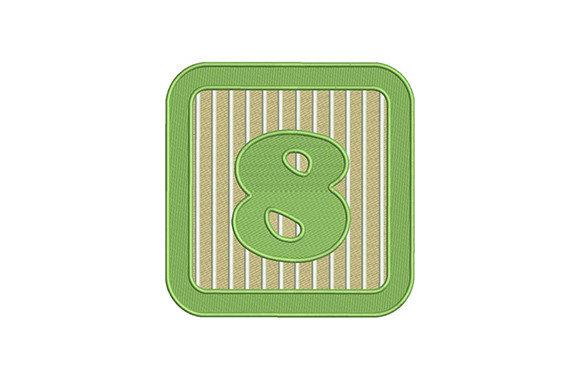
The description for Number Eight highlights its versatility, suggesting it works for gifts, room decor, and apparel. From a professional standpoint, this immediately signals a design with broad appeal. The name itself implies simplicity and balance, which are crucial traits for a logo or accent mark on merchandise. When I first look at a design titled "Number Eight," I expect clean lines and a structure that can scale without losing its character.
This design feels approachable yet polished. It strikes a balance between playful and professional, making it an excellent candidate for brands that want to appear handmade and authentic without sacrificing quality. Whether you run a local café, a creative studio, or a pet brand, Number Eight offers a visual personality that invites trust. It avoids being overly ornate, which means it will likely hold up well when digitized for various applications like apron embroidery or cap embroidery.
Real-World Application for Small Business Merch
Imagine a scenario where you own a small bakery or a florist shop. You need branded items that customers will actually want to keep. This is where Number Eight shines as a potential asset for your small business merch. Because the design is described as versatile, it can serve multiple roles within your product line.
- Custom Apparel: Use Number Eight as a chest logo accent on work shirts or a subtle detail on the sleeve. Its clean nature ensures it remains legible even on busy fabric textures.
- Embroidered Patches: One of the most popular uses for such a design is creating an embroidered patch. These patches can be ironed or sewn onto tote bags, backpacks, or denim jackets sold in your boutique. The design's structure should allow it to be stabilized effectively for a durable finish.
- Tote Bag Design: A canvas tote bag is a walking advertisement. Placing Number Eight on a tote bag creates a high-value item that customers associate with your brand every time they go shopping.
- Apron Embroidery: For bakeries or craft studios, stitching this design on chef's aprons adds a touch of professionalism. It turns a standard uniform into a branded experience.
- Craft Business Assets: If you sell digital files or offer customization services, Number Eight can be a core part of your design assets library.
In the context of Back To School promotions, this design could also be adapted for student gift packs or teacher appreciation items, expanding your reach during peak seasons.
Strategic Considerations and Limitations
While Number Eight sounds promising, a professional review must address where a design might struggle. Not every file translates perfectly to every surface. As a designer, I advise caution in the following areas before committing to production.
Small Patch Sizes: If you plan to create miniature embroidered patches for keychains or small accessories, ensure the stitch density of Number Eight does not cause thread clumping. Designs with fine details often lose definition when scaled down too far.
Curved Surfaces: Applying any design to the front of a cap requires precision. The curvature of the hat can distort the shape of the number if the hoop size or stabilizer choice is incorrect. Always test the digital embroidery file on a curved form before mass production.
Dark Uniforms and Fabric Texture: On dark fabrics, light thread colors might get lost, and on highly textured materials like heavy wool or fleece, the design may not lay flat. You must verify that the thread colors chosen provide enough contrast against your specific fabric texture.
Frequent Washing: For items like work shirts or aprons that undergo frequent industrial washing, high stitch density can sometimes lead to puckering. Ensure the underlay stitches are sufficient to anchor the design securely.
The Impact on Brand Identity and Customer Trust
Your embroidery is not just decoration; it is a tangible representation of your company's values. High-quality stitching on Number Eight signals attention to detail and pride in your work. When a customer sees a crisp, well-executed logo on a tote bag or a uniform, it reinforces brand identity and builds customer trust.
A sloppy or misaligned stitch can undermine the perceived value of your products. Conversely, a design like Number Eight, if executed correctly, enhances the finished product and makes your handmade product feel premium. It contributes to visual consistency across all your marketing channels, from your website to your physical store. This consistency is vital for buyer engagement and long-term recognition.
Practical Designer Notes for Production
Before you upload Number Eight to your embroidery machine for a commercial project, follow these essential steps to ensure success. These notes apply to anyone working with machine embroidery design files.
- Test in Black and White: Convert the design to monochrome to check the flow and spacing without the distraction of color.
- Verify Stitch Density: Check the file settings to ensure the density is appropriate for the fabric you intend to use. Too much density causes stiffness; too little causes show-through.
- Check Thread Color Contrast: Select thread colors that pop against your base material. Dark threads on dark fabric require a different strategy than light threads on white.
- Inspect Spacing: Ensure there is adequate negative space around the design elements so they do not touch each other awkwardly.
- Confirm Hoop Size: Match the design dimensions to your available hoop sizes. If the design is larger than your hoop, you will need to re-digitize it or split the file.
- Test on Real Fabric: Never embroider directly on your final product without a test run. Use scrap pieces of the exact same fabric to check tension and stability.
- Use Proper Stabilizer: The right stabilizer is the foundation of a good stitch. For caps and bags, a cut-away stabilizer is often necessary to prevent distortion over time.
- Create a Printable Mockup: Before cutting fabric, generate a printable mockup for client approval. This saves money and prevents errors.
- Compare with Other Assets: Place Number Eight beside your existing logos or text to ensure the font weights and styles match your current design assets.
- Confirm Commercial Licensing: Most importantly, verify that you have the legal right to use this embroidery file for commercial purposes. Do not assume personal licenses cover business merchandise.
By treating Number Eight with the same rigor as a major brand logo, you ensure that your commercial embroidery projects are successful. Whether you are creating gifts for children's friends or branding a full line of apparel, this design has the potential to be a standout element in your collection.
Remember, the goal is to create a cohesive story through your products. When Number Eight is stitched with care, it becomes more than just a number; it becomes a symbol of your brand's commitment to quality. Take the time to test, adjust, and perfect, and your customers will notice the difference in every stitch.